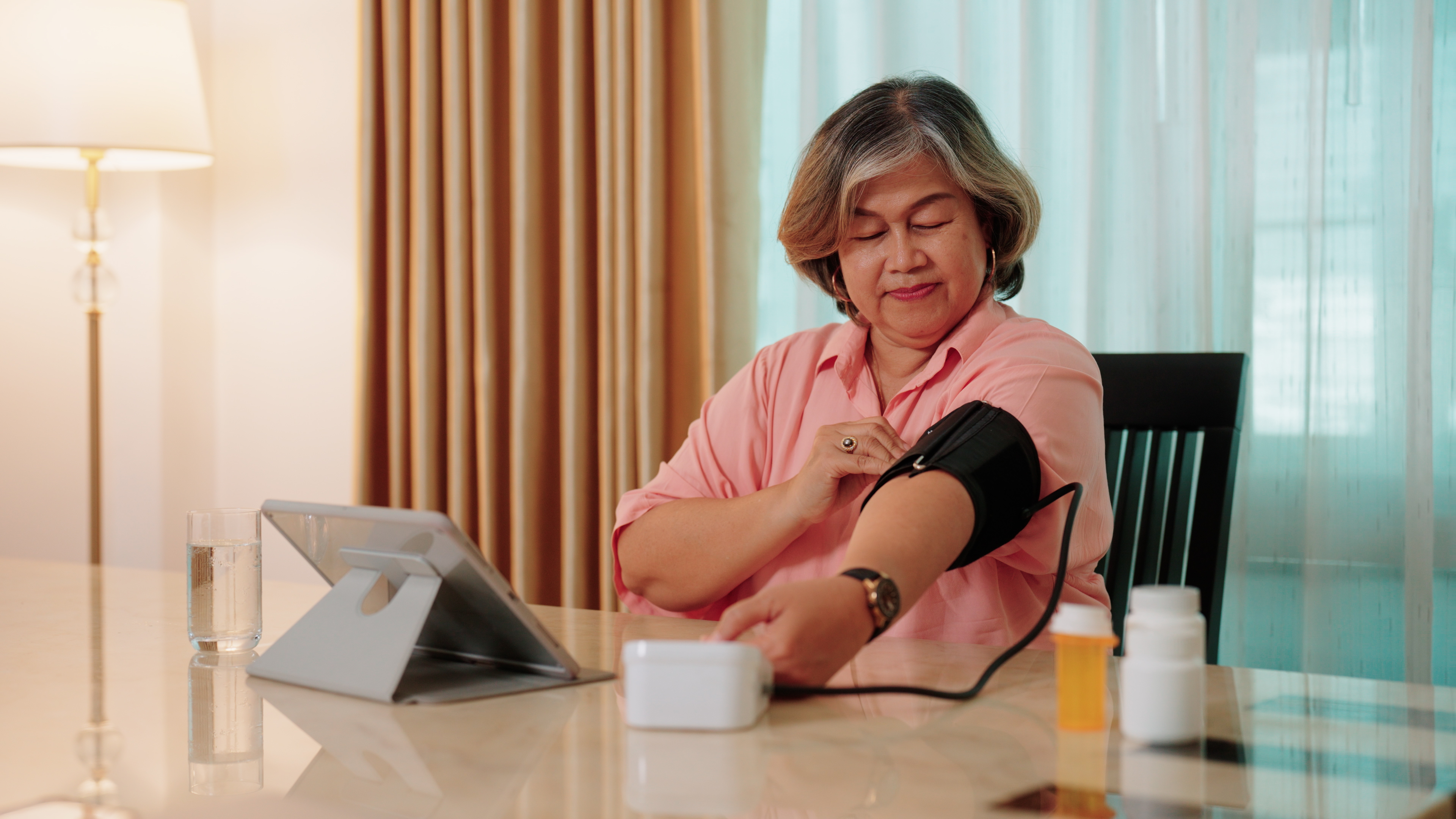
If you have high blood pressure, your doctor probably told you to start checking it at home. Maybe they handed you a cuff and said "take it twice a day." That is where most of my patients get stuck. Twice a day, when? In what position? What does the number actually mean? I have spent enough time answering these questions that I wrote it all down. This is your complete guide.
Why home blood pressure matters more than the office reading
The blood pressure reading we get in the office is one moment in time. It is also taken in a setting that often makes patients nervous. White coat hypertension, where your reading goes up just because you are at the doctor, affects about 1 in 4 people. Home readings, taken consistently over a week or two, give us a much more accurate picture of what your blood pressure actually does in your daily life.
Studies show home blood pressure readings are better at predicting heart attacks, strokes, and other cardiovascular events than office readings. That is why I ask you to track at home. We are not gathering busywork. We are gathering the real data.
What you need
Three things, no more:
- A validated upper-arm blood pressure monitor. Wrist monitors are convenient but less accurate. Skip them.
- A chair with back support and a flat surface (table, desk) at heart height.
- A tracking sheet. The Cercanos blood pressure log works, or any notebook will do.
Insurance often covers a home monitor. Ask your pharmacy or send us a message and we will help you find a covered option.
How to take it correctly: 7 steps
This is the part most patients get wrong. The technique matters as much as the device. Skip a step and your reading can be off by 10 to 20 points.
- Sit and rest for 5 minutes first.
No talking, no phone, no TV. Just sit and breathe.
- Empty your bladder.
A full bladder can raise your reading by 10 to 15 points.
- Sit with your back supported.
Feet flat on the floor. Do not cross your legs.
- Rest your arm on the table at heart height.
Arm too high or too low changes the reading. The cuff should be level with your heart.
- Wrap the cuff snugly on bare skin.
Not over a sleeve. The bottom edge of the cuff should be about one inch above your elbow crease.
- Stay still and quiet during the reading.
Do not talk to anyone. Do not move.
- Take 2 readings, 1 minute apart.
Record both. The average of the two is more reliable than a single reading.
When to take it
For most patients with high blood pressure: morning and evening, every day. Take the morning reading before your blood pressure medication. Take the evening reading before bed. This pattern catches both your morning surge and your end-of-day pressure.
If your doctor has not given you specific instructions, that is a good default. Track for a full week before drawing any conclusions.
Understanding your numbers
Two numbers, both matter. The top one (systolic) measures the pressure in your arteries when your heart pumps. The bottom one (diastolic) measures pressure between beats. Either being high is a problem. Both being high is more urgent.
| Range | What it means |
|---|---|
| Below 120/80 | Normal |
| 120 to 129 / below 80 | Elevated |
| 130 to 139 / 80 to 89 | Stage 1 hypertension |
| 140+ / 90+ | Stage 2 hypertension |
| 180+ / 120+ | Hypertensive crisis — call 911 if you have symptoms |
Tracking is the most important part
Single readings are noise. Patterns are signal. Without tracking, you and your doctor are guessing. With a few weeks of consistent readings, we can adjust your medication intelligently, see if a new lifestyle change is working, and catch dangerous patterns before they become emergencies.
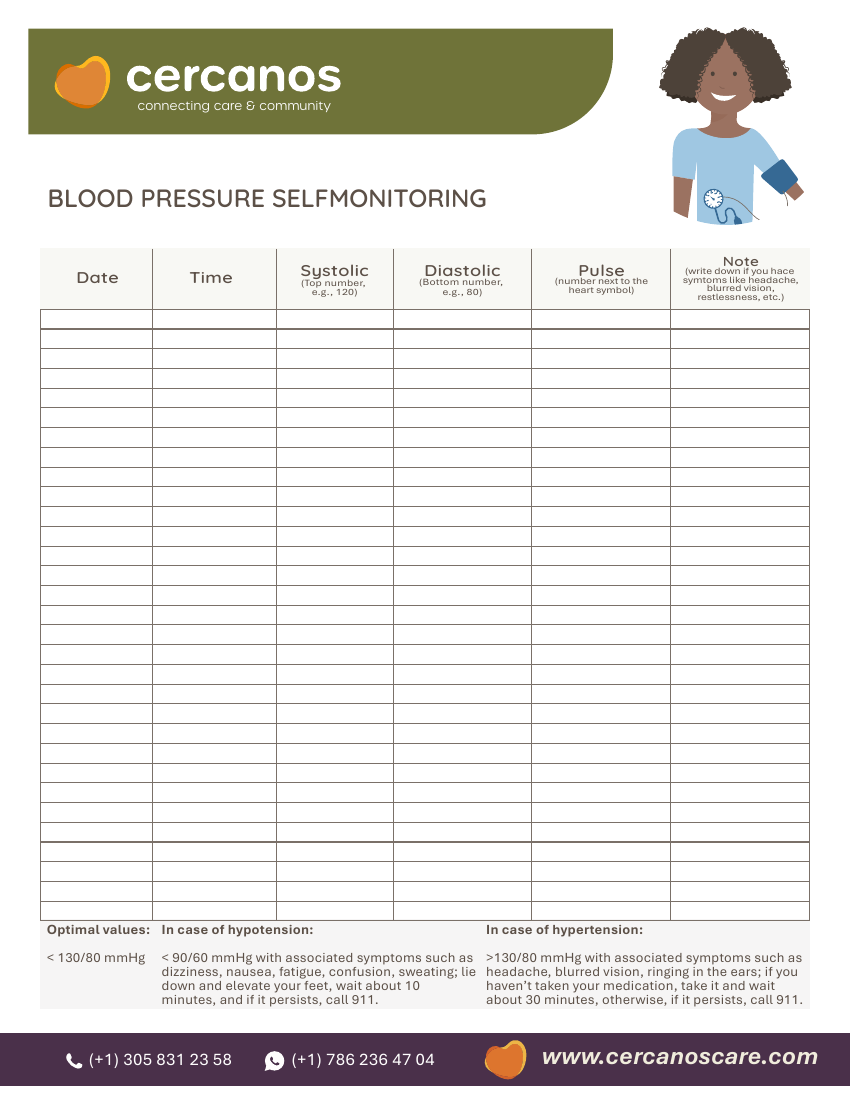
This is the type of material you would receive when you are part of our Cercanos program. You can request to receive it through the Cercanos app, by WhatsApp, or by email, whichever is easier for you.
When to call your doctor
Most readings are not emergencies. But these are:
How Cercanos helps with hypertension management
At Cercanos, our team works alongside your primary doctor to keep your blood pressure in target range between visits. That includes regular check-ins from a care coach to review your tracking, medication adjustments coordinated with your physician, and lifestyle coaching for diet, exercise, and stress.
Want to learn more about how we work with patients? Fill out our patient form and a care team member will reach out to you.
If you have Original Medicare, you might be eligible for CMS ACCESS, our free chronic care program. Either way, when you reach out we will check what is available for you.