
If you have diabetes or pre-diabetes, you have probably heard your doctor talk about your A1C. It is a number we obsess over, because it tells us more about how you are really doing with your diabetes than almost any other test. But here is the thing: most patients walk out of their appointment without really understanding what that number means or why it matters so much. I want to fix that. This is the explanation I wish every one of my patients heard.
What does A1C actually measure?
A1C, also called hemoglobin A1C or HbA1c, measures the average blood sugar in your body over the last two to three months. Not today. Not yesterday. The whole quarter.
Here is why: when sugar circulates in your blood, some of it sticks to a protein in your red blood cells called hemoglobin. The more sugar in your blood over time, the more sugar sticks. Red blood cells live for about three months, so when we measure how much sugar is stuck to them today, we are getting a snapshot of what your blood sugar has been doing all along.
That is why a single high reading on your glucometer does not worry me as much as a high A1C. One spike could be from a big meal or stress. A high A1C tells me your sugar has been running high for months.
How to read your A1C number
| Range | What it means |
|---|---|
| Below 5.7% | Normal |
| 5.7% to 6.4% | Pre-diabetes |
| 6.5% or higher | Diabetes |
| Below 7% | Treatment target for most adults with diabetes |
For most of my patients with diabetes, we aim to keep A1C below 7%. For some patients, including older adults, people with heart disease, and those at risk of dangerous low blood sugars, we aim for a slightly higher target, sometimes up to 8%. Your target is something you and your doctor decide together based on your overall health. There is no one-size-fits-all answer.
Why your A1C and your daily readings can tell different stories
Patients sometimes come to me confused: "My fasting sugar in the morning has been around 110, but my A1C is 8.2. That does not make sense."
It does, actually. Your fasting reading is one moment in time. Your A1C is the average of every reading, all day, every day, for three months. If your sugar spikes after meals (which is very common) and you are not testing then, you would never see it on your glucometer, but your A1C catches it.
This is why I tell patients: do not just test fasting. Test a couple of times after meals too, especially if your A1C is higher than your morning readings would suggest.
How to lower your A1C
There is no one trick. Lower A1C comes from a combination of:
- Consistent medication. Take what your doctor prescribed. Skipping doses, even just sometimes, is one of the biggest reasons A1C stays high.
- What you eat. Carbohydrates like rice, bread, pasta, sweet drinks, even fruit juice, turn into sugar in your blood. Smaller portions of carbs at each meal make a real difference. You do not have to give them up. Just be intentional.
- Movement. Even 20 minutes of walking after a meal can lower your blood sugar significantly.
- Sleep. Poor sleep raises blood sugar. Getting 7 to 8 hours helps.
- Stress. Stress hormones raise blood sugar. Hard to control, but worth knowing.
- Tracking. This is where I come back to the importance of self-monitoring.
Tracking your daily readings is part of the bigger picture
Your A1C tells you the average. Daily readings tell you the pattern. You need both.
When my patients track their fasting and post-meal readings consistently, I can see what is really driving their A1C. Maybe it is breakfast. Maybe it is the soda after lunch. Maybe it is stress at work. Without the data, we are guessing.
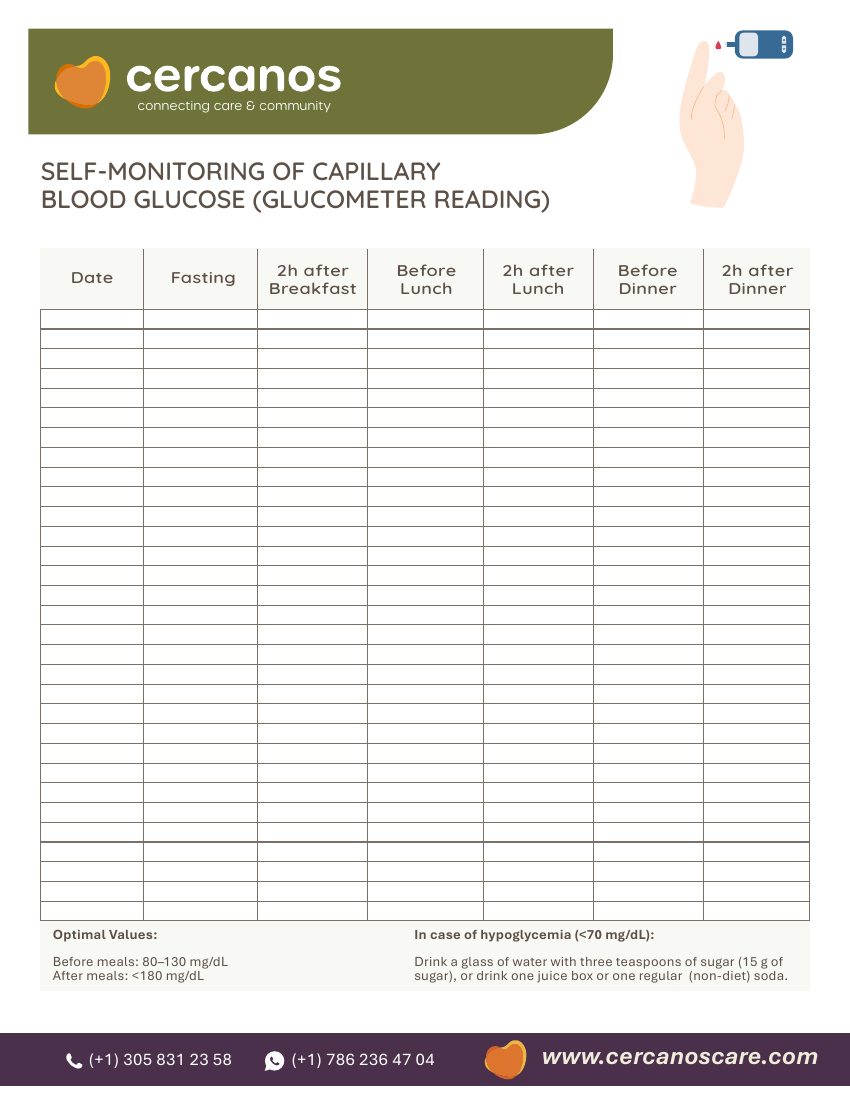
This is the type of material you would receive when you are part of our Cercanos program. You can request to receive it through the Cercanos app, by WhatsApp, or by email, whichever is easier for you.
How Cercanos helps with diabetes management
At Cercanos, our team works alongside your primary doctor to manage diabetes between visits. That includes regular check-ins from a care coach, medication review, nutrition guidance, and continuous monitoring of your readings.
Want to learn more about how we work with patients? Fill out our patient form and a care team member will reach out to you.
If you have Original Medicare, you might be eligible for CMS ACCESS, our free chronic care program. Either way, when you reach out we will check what is available for you.